
















Kids Wool Footwear That Keeps Up With Play
A child’s favorite shoes rarely stay pristine. They sprint across playground mulch, shuffle through classrooms, climb the couch after school, and somehow collect half the backyard on the way inside. The best kids wool footwear is made for that real-life rhythm: soft enough for long days, breathable across changing temperatures, and simple enough to become the pair they reach for without being asked.
For families trying to buy fewer, better things, material matters. Wool offers a naturally comfortable alternative to footwear that feels stiff, overly synthetic, or too warm the moment the day gets moving. When the shape, sole, and fit are right, it gives kids the freedom to focus on play instead of their feet.
Why wool works for busy little feet
Children’s feet do not experience a typical day in one temperature. A morning walk to school can be chilly, the classroom warm, and recess full-speed. Wool helps regulate temperature by responding to those shifts. It provides warmth when the air is cool while remaining breathable when activity picks up.
That balance is especially useful for indoor shoes, everyday sneakers, and travel pairs that may be worn for hours at a time. Rather than feeling bulky, a well-designed wool upper can feel light and flexible around the foot. It also has natural odor-resistant qualities, a practical benefit when shoes are worn often and laundry day is still a few days away.
Comfort is not only about softness. A child’s shoe needs to bend where the foot bends, stay securely in place, and leave enough room for toes to move naturally. Wool can create a gentle, accommodating upper, but the overall construction still determines whether a shoe works for daily wear. Look beyond the fabric to the sole, closure, heel hold, and intended use.
Choosing kids wool footwear by occasion
The right pair depends less on a child’s age than on where they spend their day. A preschooler who changes from indoor time to outdoor play has different needs from a school-age child walking city blocks or a family heading on a long flight.
For home and daycare
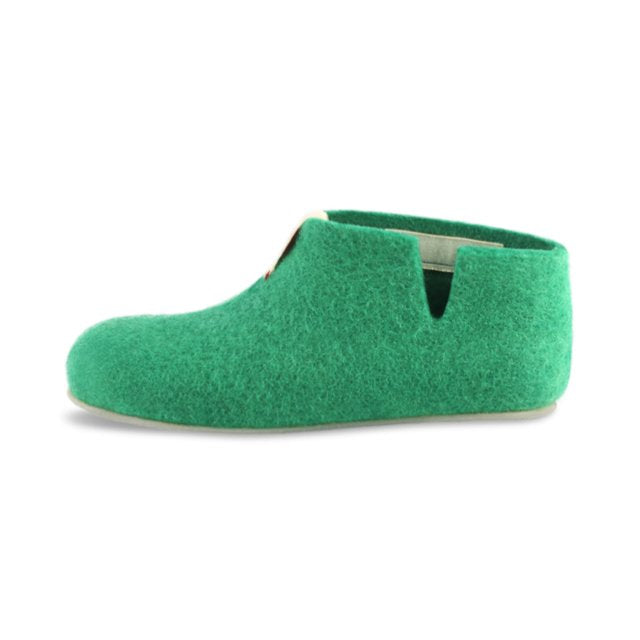
Wool slippers are a natural fit for home routines, especially on cool floors. They offer warmth without the heaviness of a traditional house shoe and can help make the transition from school clothes to downtime feel instantly more comfortable. For daycare, choose a pair with a secure fit and a grippy sole, particularly if children move between smooth indoor surfaces and supervised outdoor areas.
A slipper should not slide at the heel or require constant adjustment. If a child can put it on independently, that is a meaningful bonus on rushed mornings.
For school, errands, and everyday movement
For the pair that handles drop-off, class, errands, and weekend plans, a wool sneaker or lightweight shoe is often the most versatile choice. The goal is an easy silhouette that looks at home with jeans, leggings, or school clothes, while providing enough sole protection for regular pavement and playground use.
This is where design earns its place. A clean, uncomplicated shoe tends to work with more outfits and occasions, making it more likely to be worn frequently. Neutral colors can make hand-me-down potential easier, while a brighter option may be the one your child is excited to wear every morning. Both are valid choices if the fit is right.
For travel and changing weather
Travel asks a lot from children’s shoes: airport lines, unfamiliar floors, quick changes, and long stretches of sitting followed by sudden bursts of energy. Wool footwear can be a smart travel companion because it is comfortable across indoor heating and cooler outdoor temperatures.
Still, match the shoe to the forecast. Wool is not a substitute for a fully weatherproof boot during heavy rain, deep snow, or extended time in wet conditions. A water-resistant or waterproof outer layer and a more substantial sole may be the better option for those days. Keeping a wool pair for dry travel days, hotel rooms, and everyday exploring can make more sense than asking one shoe to do everything.
Fit matters more than the size on the box
Kids grow quickly, but sizing up too far can create its own problems. A shoe that is overly long may cause slipping, tripping, or awkward movement. A shoe that is too narrow can feel uncomfortable even if there appears to be extra space at the toe.
Measure both feet when possible, since one may be slightly longer than the other. Have your child stand during the measurement, then use the longer foot as your reference. There should be a little growing room in front of the longest toe, but the heel should feel stable and the upper should not bunch or gape.
Watch how your child walks in a new pair. Do they pull at the shoe, shuffle, complain, or take it off at the first opportunity? Those clues matter. So does the opposite response: a child who immediately runs, jumps, and forgets about their shoes has given you useful feedback.
When buying wool styles, remember that natural fibers can gently adapt to the foot with wear. That does not mean a snug shoe should be forced to work. Start with a comfortable fit from day one, especially across the toes and instep.
A more considered material choice
Children outgrow shoes. That is unavoidable. But choosing thoughtfully can still reduce the cycle of buying disposable pairs that wear out before the season ends. Durable soles, quality construction, and materials chosen for everyday performance all support a longer useful life.
Wool also brings a less plastic-heavy feel to a category often dominated by synthetic uppers. For families who care about the materials entering their home, that is a meaningful part of the decision. It is not about finding a perfect product. It is about selecting footwear that aligns comfort, function, and a more responsible approach to consumption.
At Baabuk, wool sits at the center of that approach, paired with Swiss-inspired design and a focus on footwear that earns its place in everyday routines. A good kids’ shoe should feel considered without becoming precious. It should be ready for the ordinary mess and motion of childhood.
How to keep wool shoes ready for the next day
Wool is naturally low-maintenance, but it still benefits from simple care. Let shoes air out between wears rather than storing them immediately in a closed bag or bin. For loose dirt, wait until it dries, then brush it away gently. Spot clean small marks with a damp cloth and mild soap when needed, using as little water as possible.
Avoid high heat, aggressive scrubbing, and long soaking. Those shortcuts can affect the shape and feel of natural fibers. If the removable insole needs freshening, take it out to air separately. Following the care guidance for the specific style is always the safest choice, since soles, linings, and finishes can vary.
It also helps to give one everyday pair a break now and then. Rotating shoes allows them to dry fully and can extend their wearable life, particularly during damp seasons or active school weeks.
When wool footwear may not be the answer
No material is the best choice for every situation. For puddle jumping, muddy trails, organized field sports, or icy winter conditions, select footwear designed specifically for that job. The same is true for children who need particular orthopedic support or a prescribed shoe structure. In those cases, comfort should be guided by a pediatric specialist’s recommendations.
But for the many in-between moments that make up family life - getting dressed, heading to school, playing indoors, traveling, visiting friends, and winding down at home - wool can make an everyday difference. It feels natural, looks clean, and meets busy feet with the kind of comfort they notice only when it is missing.
The most useful pair will not be the one you save for special occasions. It will be the one by the door, slightly scuffed and well loved, ready for whatever your child decides to do next.