
















Are Wool Slippers Durable? What Lasts Longer
A pair of slippers earns its place by the door only after hundreds of ordinary moments: early coffee, work-from-home calls, cold kitchen floors, quick trips to the mailbox. So, are wool slippers durable enough for that kind of daily life? Yes, when they are made with dense wool, thoughtful construction, and a sole matched to how you actually move through your home.
Wool is often mistaken for a delicate material because it feels soft. In footwear, the opposite can be true. Properly felted wool creates a structured, resilient upper that handles regular wear while staying warm, breathable, and naturally comfortable against bare feet. Still, no slipper is indestructible. Its lifespan depends on the materials, the sole, the fit, and the care it receives.
Are Wool Slippers Durable for Everyday Wear?
Wool slippers can be highly durable for everyday indoor wear. Wool fibers have a natural crimp, which allows them to bend and recover rather than staying flattened after every step. That springiness helps a well-made wool upper hold its shape over time, even when it is worn daily.
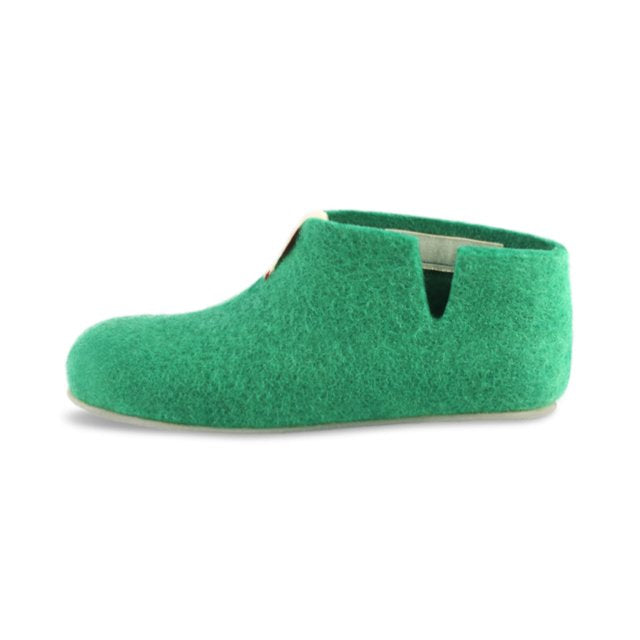
The way the wool is made into a slipper matters as much as the fiber itself. Dense felted wool is especially well suited to footwear because the fibers are interlocked into a substantial fabric. It is less likely to sag or lose its form than a loose knit, while still providing the soft, temperature-regulating feel people expect from wool.
For most homes, a quality wool slipper can be a dependable daily layer between your feet and hard floors. It is particularly practical for remote workers, apartment dwellers, and anyone who wants indoor footwear that feels less bulky than a conventional house shoe. If you wear slippers exclusively indoors and give them occasional care, the upper can remain comfortable and presentable for years.
The trade-off is simple: wool is made for comfort and everyday movement, not repeated abrasion against pavement. A slipper with a soft sole is ideal for indoor living but should not become your default shoe for long walks outside. For homes where stepping onto a patio, grabbing the mail, or walking to a shared laundry room is part of the routine, a more protective outsole makes a meaningful difference.
What Determines How Long Wool Slippers Last?
Durability is not one feature. It is the combined result of material density, sole design, construction, fit, and how the slipper is used.
Dense wool holds up better
Thicker, properly felted wool resists thinning and maintains structure better than lightweight wool fabric. It can absorb everyday pressure while cushioning the foot, and it is naturally resistant to odors when aired regularly. A dense upper also looks more refined over time because it is less prone to stretching out of shape.
That does not mean thicker always feels heavier. Good wool footwear is designed to balance structure with flexibility. The goal is a slipper that feels easy from the first wear but does not collapse after a season.
The sole takes the hardest wear
The outsole usually determines when a slipper begins to show its age. Felt or wool soles feel quiet, flexible, and close to the floor, but they are best reserved for clean indoor surfaces. Rubber or rubber-blend soles provide more grip and protection, making them a better choice for mixed indoor-outdoor routines.
Look at your floors honestly. Smooth wood, tile, and low-pile carpet are gentle on slippers. Rough concrete, outdoor stone, wet decking, and frequent stair climbing ask more of the sole. Choosing the right sole at the start is one of the easiest ways to get more wear from a pair.
A secure fit reduces friction
Slippers that are too large can wear out faster because the heel lifts and the foot slides inside. That movement creates friction at the heel, toe, and sidewalls. A pair that is too tight has a different problem: it places unnecessary strain on seams and can compress the wool unevenly.
A good fit should feel snug at first without pinching. Wool gradually adapts to the contours of your foot, so a slight close fit often becomes the most comfortable one after a few wears. If you are between sizes, consider the design, whether you wear socks, and the fit guidance for that particular style.
Construction matters beyond the material
The connection between upper and sole is a high-stress area, especially at the toe bend and heel. Clean stitching, well-bonded layers, and an outsole shaped to support natural movement all help a slipper stay dependable. A beautifully soft material cannot compensate for weak construction.
This is why a lower-priced slipper can become more expensive over time if it loses its shape quickly or needs replacing every winter. A well-designed pair asks for a greater initial commitment, but it also delivers more days of comfort before repair or replacement becomes necessary.
How to Make Wool Slippers Last Longer
Daily care does not need to be complicated. The most useful habit is also the simplest: give your slippers time to air out. Wool manages moisture effectively, but it still benefits from drying between wears, particularly after warm days or long periods on your feet. Place them in a ventilated area rather than leaving them in a closed shoe cabinet.
Brush off dry dirt as needed and spot-clean small marks with a damp cloth and mild wool-safe soap. Avoid soaking the slippers unless the care instructions specifically allow it. Excess water, heat, and agitation can change the shape of wool, while a dryer can shrink both the upper and lining.
If your slippers become damp, reshape them gently and let them dry naturally away from direct radiators or intense sunlight. This protects the fibers and helps preserve the fit. Rotating between two pairs can also extend the life of each pair, especially during colder months when slippers get constant use.
It helps to reserve indoor slippers for indoor use. A quick outdoor step will not ruin a durable-soled pair, but repeated contact with grit and rough pavement steadily wears down the bottom and transfers dirt into the wool. Think of it less as being precious with your footwear and more as using the right product for the right setting.
When Wear Is Normal and When It Is Time to Act
Some changes are expected. Wool may mold more closely to your foot, develop a slightly lived-in texture, or show light compression in high-contact areas. These are signs of a slipper doing its job, not immediate signs that it has failed.
More serious wear includes a hole in the sole, a detached outsole, thinning that exposes an uncomfortable area, or a seam beginning to pull apart. Addressing those issues early can keep a small repair from becoming a reason to discard a pair. Brands that offer repair and replace options, recycling, or resale pathways make that decision easier and help keep useful materials in circulation.
At Baabuk, durability is part of the reason wool is central to the collection. A slipper should feel considered from its first quiet morning through the many routines that follow. Natural materials, practical sole choices, and long-term care belong together.
The best wool slippers are not the ones you keep pristine. They are the ones that become part of your home, stay comfortable through daily wear, and are cared for well enough to keep going when the season changes.
