














Best Slippers for Tile Floors at Home
Cold tile has a way of deciding your morning before coffee does. If your first few steps across the kitchen or hallway feel slick, hard, or surprisingly chilly, finding the best slippers for tile floors becomes less about style alone and more about daily comfort you actually notice.
Tile is one of the most practical surfaces in a home, but it asks more from a slipper than carpet ever will. The right pair needs grip without feeling heavy, softness without collapsing underfoot, and enough structure to move naturally from bedroom to kitchen to quick steps outside. That balance is where material and construction matter.
What makes the best slippers for tile floors
Tile floors are smooth, often cool, and less forgiving than wood or carpet. That means slippers need to solve three problems at once: slipping, impact, and temperature. A pair that feels cozy on the couch can still underperform the moment it meets polished tile.
The outsole is the first place to look. A good slipper for tile should have real traction, not just a decorative pattern stamped into a soft sole. You want grip that holds on smooth surfaces, especially in homes where the floor may get damp near entryways, kitchens, or bathrooms. At the same time, a very stiff rubber sole can feel more like an outdoor shoe than an indoor essential. The sweet spot is flexible traction that supports confident movement without adding bulk.
Underfoot cushioning matters too, but there is a trade-off. Plush foam can feel great at first, yet some overly padded slippers become unstable on hard floors because your foot sinks and shifts. For tile, moderate cushioning with a supportive base usually feels better over time. It gives some shock absorption while keeping your stride steady.
Then there is warmth. Tile pulls heat away quickly, so uppers made from breathable natural materials tend to perform better than dense synthetic fabrics that trap heat unevenly. Wool is especially well suited here because it insulates without feeling stuffy, helps regulate temperature, and stays comfortable across seasons. In a cool home, that can make a noticeable difference from the first wear.
Why material matters more on tile than on carpet
On carpet, almost any slipper can get by. The floor supplies some softness and friction, so the slipper does less work. Tile exposes weak design fast. Thin soles feel flatter. Synthetic linings can get clammy. Slippers without shape start to twist or slide.
This is why premium materials earn their place in this category. Wool stands out because it adapts well to indoor life. It feels warm when the floor is cold, yet it remains breathable enough for year-round wear. It also has a naturally comfortable hand feel that does not rely on excessive padding to seem soft.
A well-made wool slipper can also look more refined. That may sound secondary, but for many people working from home or moving through shared spaces, design still matters. The best indoor footwear should feel considered, not disposable. Clean lines, minimal bulk, and durable construction turn slippers into part of the rhythm of home rather than something you hide by the door.
The features worth prioritizing
If you are comparing options, start with the sole. For tile floors, a textured outsole with dependable grip is essential. Next, look at how the upper holds the foot. A slipper that stays securely on your foot is usually safer and more comfortable than one you have to grip with your toes as you walk.
Shape is another detail that gets overlooked. Open-back styles are easy to slip on, but they are not always the best choice for long walks across hard floors or carrying laundry up and down stairs. Closed-back slippers or styles with a more secure heel tend to feel steadier. If convenience is your top priority, open-back can still work, but it helps to choose a pair with a well-balanced sole and a snug upper.
Breathability should be high on the list too. A warm slipper that overheats quickly becomes a seasonal product. A breathable wool construction is more versatile because it helps maintain a comfortable temperature instead of simply adding insulation. That means the slipper stays useful beyond winter.
Finally, consider durability. Tile floors are tough on outsoles and midsoles because there is less give under every step. Slippers made with thoughtful construction and quality materials tend to keep their shape longer. That translates to more comfort and less waste.
Best slipper styles for tile floors
Not every slipper style performs the same way at home. The best option depends on how you move through your space and what kind of support you like underfoot.
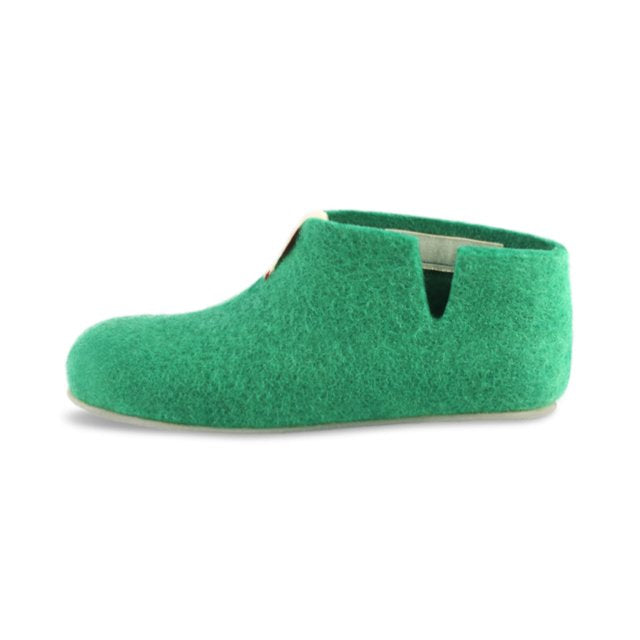
A closed slipper is often the most dependable choice for tile. It wraps the foot, reduces slippage inside the shoe, and usually feels more stable on hard surfaces. This style suits anyone who wears slippers for long stretches, especially while cooking, cleaning, or working from home.
A slip-on mule can work well if it has a grippy sole and a secure fit across the top of the foot. It is convenient and easy, which makes it appealing for quick transitions. The trade-off is that some mule styles can feel less stable if the fit is loose.
Sock-like slippers are soft and packable, but many are too minimal for tile unless they include a supportive sole. They are fine for light wear, though usually not the best choice if your home has large tiled areas.
Indoor-outdoor slippers can be ideal if you want one pair for tile floors, stepping onto a patio, or bringing in packages. The key is restraint. If the outsole is too rugged or heavy, the comfort can start to feel more like a casual shoe than a slipper. The best versions stay light, flexible, and clean in design.
Why wool works so well indoors
Wool is one of those rare materials that feels simple until you live in it. On tile floors, its benefits become obvious quickly. It offers natural insulation, which helps buffer against cold surfaces without creating that overheated feeling common with synthetic fleece. It also breathes well, so your feet stay comfortable whether the heat is on full blast in January or the afternoon sun warms the room in spring.
There is also a tactile quality to wool that suits home life. It feels soft but grounded, comfortable without looking overly casual. For shoppers who care about both design and function, that balance matters.
From a responsibility standpoint, natural materials also support a more considered approach to buying. A slipper you wear every day should be durable, repairable when possible, and worth keeping in rotation. That mindset is part of why wool slippers continue to resonate with people looking for comfort with a lower-impact lens. Brands such as Baabuk have built around that idea, pairing wool expertise with clean design and long-wear practicality.
How to choose the right pair for your home
The best choice depends on your space and habits. If your home has polished tile throughout, traction should lead your decision. If your tile is mostly in the kitchen and bathroom, a versatile slipper with a grippy sole and breathable upper may be enough.
Think about temperature too. In colder homes, wool insulation becomes a bigger advantage. In warmer climates, breathable construction matters more than thick lining. More padding is not always better. For many people, a lighter slipper with stable support feels better across a full day than a very plush one that compresses quickly.
Fit should be precise. Slippers for tile floors should feel secure from the start, not oversized and floppy. A snug but comfortable fit helps the sole move with your foot and reduces the risk of sliding inside the slipper itself. If you often wear socks, factor that into sizing.
It is also worth considering aesthetics. When a slipper looks good, you are more likely to wear it consistently rather than treating it as an afterthought. Minimal design, quality texture, and a well-shaped silhouette tend to age better than trend-driven styles.
A better standard for everyday comfort
The best slippers for tile floors do not need to be overbuilt. They need to be thoughtful. Grip that feels reliable, materials that regulate comfort naturally, and a shape that supports the way you actually live at home will always outperform a slipper that is merely soft.
If your floors are hard, cold, or a little slick, choosing well makes every room feel easier to move through. That is a small upgrade with a surprisingly big return, especially on the days when home is where you spend most of your time.
