
















How Wool Footwear Insulation Keeps Feet Comfortable
Your feet do not experience temperature in a straight line. A chilly walk to the train, a warm office, a long day at home, and a quick trip outside can all ask something different of the same pair of shoes. Wool footwear insulation helps meet those shifts by creating gentle warmth without the stiff, overbuilt feeling often associated with insulated footwear.
That balance is why wool works so well in slippers, everyday sneakers, and boots. It is not simply about making footwear warmer. It is about creating a more comfortable microclimate around your feet, whether you are working from home, traveling light, or moving through a full day in the city.
How wool footwear insulation works
Insulation begins with air. Wool fibers have a naturally crimped structure that creates tiny pockets of air within the material. Those pockets slow the transfer of heat, helping your body retain warmth when the temperature drops.
Unlike a bulky synthetic fill, wool can provide this insulation in a relatively light, flexible form. That matters in footwear, where added volume can change the fit, restrict movement, or make a shoe feel heavier than it needs to. A wool-lined slipper can feel cozy without becoming clumsy. A wool sneaker can offer comfort through cool weather without looking like a winter boot.
Wool also handles moisture differently from many common shoe materials. Feet naturally release moisture throughout the day, even when they do not feel sweaty. Wool fibers can absorb a meaningful amount of water vapor before feeling damp, helping reduce that clammy feeling that can build up inside tightly closed shoes.
This is especially useful during transitional seasons. You may start the day in cool air, warm up while walking, then spend hours indoors. Footwear that traps heat but cannot manage moisture can quickly feel uncomfortable. Wool works to moderate both conditions, which is the real value behind its insulating performance.
Warm, breathable, and made for daily wear
Warmth without breathability is only half a solution. For everyday footwear, comfort depends on how a material behaves over time, not just how it feels when first put on.
Wool supports airflow while helping retain body heat. The result is a more even, less stuffy feel than footwear built around non-breathable layers. For people who wear slippers for long stretches at home, that can mean feet stay comfortable from a quiet morning through an afternoon at the desk. For commuters and frequent travelers, it can make one pair more adaptable across changing indoor and outdoor conditions.
There is also a sensory benefit. Wool has a soft, textile-like hand that brings a feeling of ease to footwear. When paired with a considered footbed and a flexible sole, it can make a shoe feel less like equipment and more like a natural part of your day.
That said, insulation needs vary. Someone who runs warm may prefer lighter wool footwear or a lower-cut style for most of the year. Someone walking outdoors in freezing, wet weather may need a more protective construction, along with warm socks and weather-appropriate outer layers. Wool regulates temperature well, but it is not a replacement for a fully weatherproof boot when conditions demand one.
The construction matters as much as the fiber
A shoe is a system, not a single material. The performance of wool footwear insulation depends on where the wool is placed and what surrounds it.
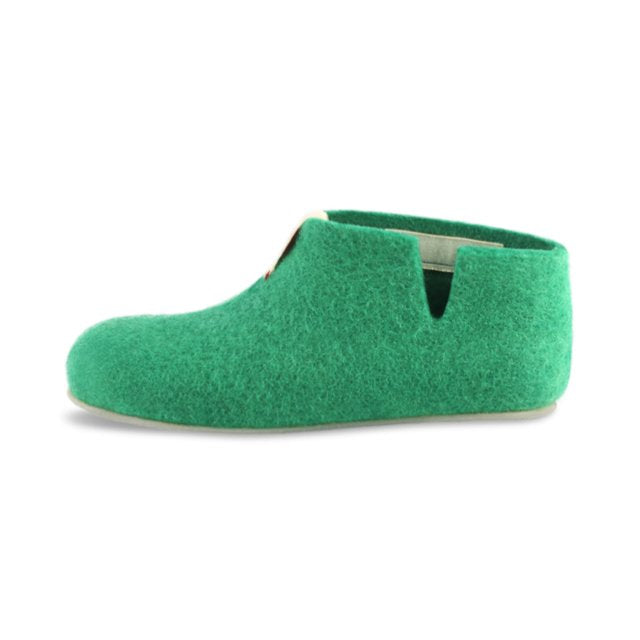
A wool upper can help create a breathable, adaptable environment around the foot. A wool lining adds warmth and softness inside a more structured shoe. A felted wool construction can provide shape, insulation, and a clean, minimal look in one material expression. Each approach serves a different use case.
Slippers benefit from wool's ability to keep feet comfortably warm during low-activity indoor time. Sneakers can use wool to bring breathability and temperature regulation to everyday movement. Boots benefit when wool is paired with a supportive sole and a construction suited to cooler conditions.
The sole also changes the experience. A thin, flexible sole may feel closer to the ground and work beautifully indoors or on dry city streets. A more substantial sole provides greater separation from cold pavement and can suit longer outdoor wear. Neither is universally better. The right choice comes down to where, when, and how you plan to wear your footwear.
Fit is part of the equation, too. Insulation works best when there is enough room for natural circulation around the foot. Shoes that are overly tight can reduce comfort and make any warm material feel oppressive. If you plan to wear thicker socks, account for that when choosing your size and silhouette.
Why wool performs beyond winter
It is easy to think of wool as a cold-weather material, but its appeal reaches beyond the coldest months. Temperature changes do not disappear when winter ends. Air-conditioned offices, cool evenings, early flights, and drafty floors create year-round moments when feet benefit from a little insulation.
This is where wool earns its place as an everyday material. Rather than relying on a single season, it responds to a wider range of conditions. A wool sneaker can feel comfortable on a brisk morning and remain wearable when the afternoon warms up. A pair of wool slippers can keep bare feet from feeling cold on hardwood floors without creating the overheated feeling of heavy indoor shoes.
For travel, this versatility can reduce the need to pack separate pairs for every temperature. The goal is not to bring one shoe everywhere, but to choose styles with enough natural adaptability to handle the ordinary changes that happen between home, transit, work, and downtime.
Care helps preserve insulating performance
Wool is naturally resilient, but good care keeps footwear feeling better for longer. The simplest habit is to let shoes air out between wears. This gives absorbed moisture time to release and helps maintain a fresher interior.
For light surface dirt, allow mud to dry, then brush it away gently. Spot clean when needed, using a minimal amount of water and a mild cleaner suitable for wool. Avoid soaking footwear or placing it near intense direct heat, which can affect shape and material performance. If your pair gets wet, remove any inserts if possible, stuff it lightly with paper, and allow it to dry gradually at room temperature.
Rotation also makes a difference. Giving a frequently worn pair a rest day can support drying and extend its useful life. When a shoe eventually needs attention, repair and replacement options can help keep a well-loved pair in use rather than sending it aside too soon.
A material choice that asks for less excess
Many insulated shoes are built by stacking multiple layers of foam, plastic film, and synthetic padding. Those materials can have a place in highly specific conditions, but everyday footwear does not always need that level of construction.
Wool brings several useful qualities together in one natural fiber: warmth, breathability, softness, and moisture management. That can support a simpler material approach and a cleaner design language. It also makes wool footwear easier to appreciate on its own terms, without excessive branding or unnecessary bulk.
At Baabuk, this material-first perspective shapes footwear designed for real routines: slow mornings, city errands, remote workdays, weekend travel, and time outdoors when the weather is cooler than expected. Swiss-inspired design and responsible product care are part of making comfort feel considered, not disposable.
The best pair is the one that suits your climate and your routine. Choose wool footwear insulation when you want warmth that stays light, comfort that can breathe, and a material that makes ordinary movement feel a little more natural.