
















Are wool slippers really too warm in summer?
The question "Are wool slippers really too warm in summer?" usually comes up the first time temperatures rise and familiar slippers start to look decidedly wintery. It is a fair question. But warmth and overheating are not the same thing. A well-made wool slipper can feel cozy without trapping the kind of stale heat that makes feet uncomfortable on a warm afternoon.
For many homes, wool slippers remain a comfortable choice well beyond winter. The deciding factors are the wool construction, the density of the upper, the sole, your indoor temperature, and how you prefer to wear footwear at home. Think of wool as a material that responds to changing conditions, not simply as insulation reserved for cold weather.
Are wool slippers too warm in summer?
Not necessarily. Wool fibers naturally help manage moisture and allow air to circulate around the foot. When feet get warm, that matters more than a slipper feeling thin. A very light synthetic slipper may seem like the obvious summer option, yet synthetic materials can hold onto moisture and create a clammy feeling after hours of wear.
Wool takes in moisture vapor before the surface feels damp, helping feet stay more comfortable as temperatures shift. That is useful during a cool early morning, a sunny work-from-home afternoon, and an air-conditioned evening - all in the same day. Rather than forcing your feet into one temperature, wool helps create a more balanced indoor climate.
This does not mean every wool slipper will suit every July day. A heavily lined, thick-soled style can feel too insulated in a very warm apartment, especially if you naturally run hot. But a breathable wool upper with a lighter profile is often far more summer-friendly than its cozy appearance suggests.
Why wool feels different from ordinary warm materials
The answer lies in the fiber. Wool has a naturally crimped structure that creates tiny pockets of air. In cooler conditions, those pockets provide insulation. In warmer conditions, the material can help buffer changes in heat and moisture instead of sealing them against the skin.
That is a meaningful difference from foam-heavy house shoes or plastic-based uppers. Those materials may cushion the foot, but they often do less to regulate the microclimate inside the shoe. After a few hours at a desk, in the kitchen, or moving around the house, the result can be warm, damp feet rather than simple comfort.
Wool is also naturally odor resistant, which is useful in summer when slippers are worn more frequently without socks. It does not make care unnecessary, but it can make everyday wear feel fresher between cleanings. Letting slippers air out after use is usually enough to reset them for the next day.
The construction matters as much as the material
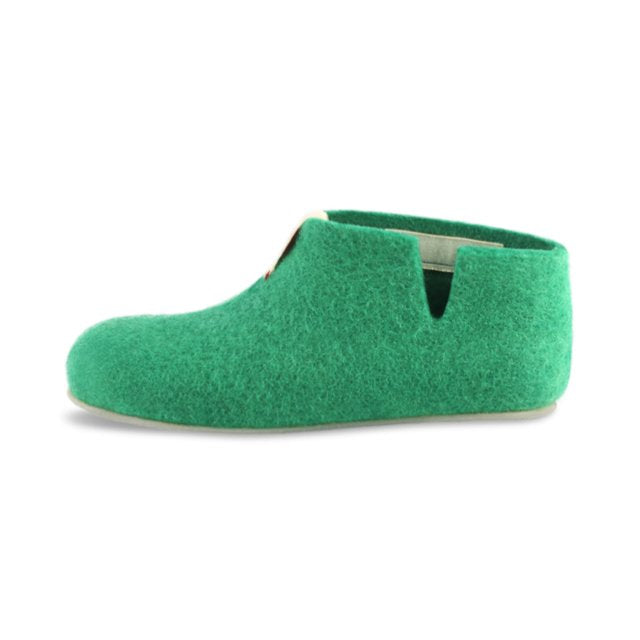
Not all wool slippers are made for the same moment. A dense, boot-like slipper gives more coverage and can be ideal for cool floors, drafty houses, or people who like a cocooned feel year-round. On the other hand, a low-cut slipper leaves more of the ankle exposed and generally feels lighter in warm weather.
Sole choice also changes the experience. A flexible sole can be a comfortable option for long stretches indoors, while a more substantial rubber sole adds protection for quick trips onto a patio, to the mailbox, or around shared outdoor spaces. That extra structure can feel warmer underfoot, but it also makes a pair more versatile.
Pay attention to fit, too. Slippers that are overly snug restrict airflow and make any material feel warmer. Wool tends to soften and adapt with wear, so the best fit should feel secure but not compressed across the toes or instep. If you are between sizes, consider how you plan to wear them: barefoot wear generally calls for a close, comfortable fit, while socks add volume.
When wool slippers work especially well in summer
Summer is not one uniform temperature. Even hot regions have cool mornings, air-conditioned interiors, tile or hardwood floors, and rainy days that call for more comfort than bare feet provide. Wool slippers make particular sense when your indoor environment changes more than your outdoor forecast does.
They are also a practical choice for remote work. Bare feet can get cold against hard floors during a long day at the desk, while heavy footwear can feel unnecessary indoors. A streamlined wool slipper offers a middle ground: soft enough for home, polished enough to keep by the door when your day includes a quick errand or a step outside.
For travel, wool can earn its place in a carry-on as well. Hotel floors, vacation rentals, and overnight flights often feel cooler than expected. A lightweight pair of slippers gives feet a familiar reset without packing the bulk of traditional cold-weather footwear.
When a lighter option may be better
There are times when no closed slipper will feel right. If your home stays very hot, humidity is high, or you prefer maximum airflow around your toes, a sandal or an open-back house shoe may be the better summer choice. Comfort should never become a rule you have to follow.
The same applies if you are doing active chores in direct sun or walking long distances outdoors. Indoor wool slippers are designed around home comfort and everyday versatility, not as a replacement for performance footwear in every setting. Matching the shoe to the moment helps it last longer and feel better.
A simple approach is to keep one pair of wool slippers for daily indoor use and reach for lighter open footwear on the hottest days. This gives you the benefits of wool when you want them without treating one style as the answer to every summer plan.
How to wear wool slippers comfortably in warm weather
Start barefoot if that feels good to you. Wool’s moisture management is especially noticeable without a synthetic sock layer between your foot and the slipper. If you prefer socks, choose a lightweight natural-fiber pair rather than a thick athletic style.
Give slippers a chance to air out in a dry, shaded place after wearing them. Avoid leaving them on a hot deck, near a radiator, or in direct sun for long periods, as excessive heat can affect their shape and finish. For everyday maintenance, shake out debris and use a soft brush if needed. Spot-clean only when necessary, following the care instructions for your specific pair.
Rotating footwear can also help. If you wear slippers from breakfast through bedtime, letting them rest overnight supports a fresher feel and gives absorbed moisture time to release. This is a small habit with a real impact on long-term comfort.
A more considered way to choose summer comfort
Choosing wool in summer is not about pretending the season is cold. It is about choosing a material that works with everyday temperature changes while reducing dependence on disposable, plastic-heavy comfort products. A durable pair that you enjoy across more months of the year is often the more thoughtful choice than a seasonal item used briefly and forgotten.
At Baabuk, wool footwear is designed around that kind of everyday flexibility: comfort that belongs at home, on the move, and across changing seasons. Look for the shape and sole that fit your routine, rather than choosing based on the calendar alone.
On the next warm morning, try your wool slippers for an hour before deciding they are too cozy for summer. Your feet may find that breathable comfort has less to do with how a slipper looks and more to do with how it feels after a full day at home.


