
















Slipper Traction Review for Safer Daily Steps
A polished wood floor can turn an ordinary trip for coffee into a small test of balance. That is why a slipper traction review should look beyond whether a pair feels soft the moment you put it on. The right slipper needs to support the way you actually move: across hardwood, tile, stairs, entryways, and the occasional dash outside to grab the mail.
Grip is not only about safety. It changes how confidently a slipper works as part of your day. A well-designed sole helps a warm, comfortable indoor shoe feel dependable rather than delicate, without making it stiff or overly technical.
What slipper traction really means
Traction is the friction between a slipper's outsole and the surface beneath it. A good outsole resists sliding while allowing your foot to move naturally. It should feel stable as you shift your weight, turn around a kitchen corner, or carry a full basket of laundry downstairs.
The practical test is simple: can you walk normally without adjusting your stride? If you find yourself shuffling, taking smaller steps, or avoiding certain rooms, the slipper is not giving you enough confidence for your home.
No sole grips equally well everywhere. Dry hardwood and low-pile carpet are forgiving. Smooth tile, wet entryway floors, and dusty concrete are more demanding. A traction-focused slipper should perform consistently on common dry indoor surfaces, while still asking for common sense around water, oil, ice, and freshly mopped floors.
Slipper traction review: the details worth checking
Start at the bottom. Outsole material and pattern tell you more about real-world grip than a product photo of a cozy upper ever can.
Outsole material
Soft rubber generally creates more grip than a thin textile sole because it can make better contact with the floor. It is a strong choice for people who move between rooms often, live with hard flooring, or want the option to step briefly onto a dry patio or porch.
The trade-off is weight and structure. A rubber outsole makes a slipper more versatile, but it may not have the barely-there feeling of a traditional soft house shoe. For many people, that is a welcome exchange: the slipper feels more secure and lasts longer under daily use.
Textile or suede-like soles can feel quiet and flexible, particularly on carpet. They are better suited to low-impact indoor wear, but can become slick on smooth floors as they wear down. If your home has a mix of surfaces, choose based on the floor where you spend the most time standing and walking.
Tread pattern
Look for visible texture, channels, or raised sections across the sole. These features create edges that help interrupt a slide. A sole does not need deep hiking-shoe lugs to work well indoors, but it should not be completely smooth either.
Patterns that cover the heel and forefoot matter most. The heel meets the floor first as you walk, while the forefoot carries you through push-off. A tread pattern limited to the middle of the sole may look clean, but it offers less support where motion happens.
Fine texture can be effective on dry surfaces. Larger grooves are more useful when you may encounter dust, small debris, or a damp threshold. Neither is a substitute for wiping up spills, but a thoughtful pattern gives you a more forgiving base.
Contact area and sole shape
A stable slipper does not necessarily need a wide, heavy platform. Still, the outsole should extend cleanly beneath your foot rather than curling too far upward at the sides. A balanced base helps reduce that unstable feeling when you turn quickly or step off a rug.
Pay attention to the heel, too. A thin or compressed heel can change how securely your foot lands. If you wear slippers for several hours at a time, a sole with enough structure to distribute pressure can make your stride feel steadier by the end of the day.
Fit affects grip more than most people expect
Even the best outsole cannot compensate for a loose fit. If your heel lifts, your toes slide forward, or your foot shifts inside the slipper, your body starts making small corrections with every step. Those adjustments can feel tiring and reduce your sense of stability.
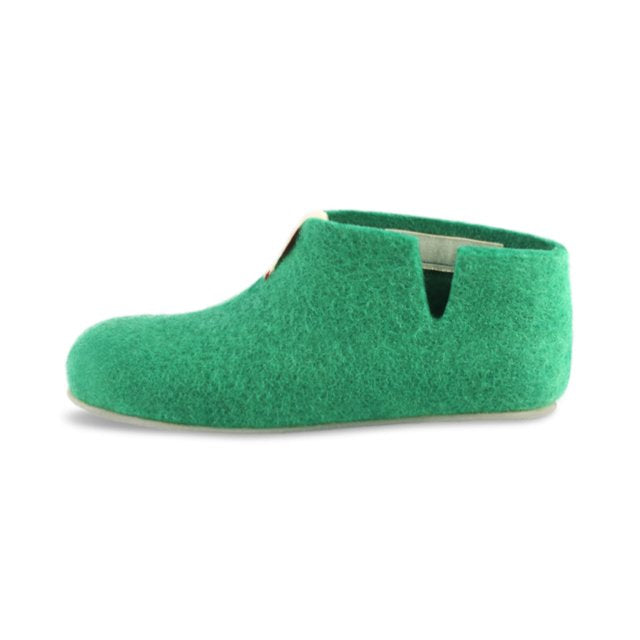
A secure fit should hold the foot comfortably without squeezing it. Wool is especially useful here because it can feel soft against bare skin while helping manage warmth and moisture through changing indoor temperatures. As the upper settles to your foot over time, it should feel more personal, not sloppier.
Closed-back slippers usually offer more heel security than open-back styles. That makes them a practical choice for stairs, homes with hard floors, or anyone who wants one pair for active mornings and relaxed evenings. Open-back designs are easier to slip on, but they are best when you are walking at an unhurried pace on predictable surfaces.
Sizing also matters. A size that is too large can create heel movement, while one that is too small may leave your toes crowded and affect your balance. Try slippers on with the socks you expect to wear most often, or barefoot if that is your usual routine. The fit should feel intentional from the first few steps.
How to judge traction at home
A good slipper traction review is based on your own routines, not just a single walk across the living room. Wear a new pair indoors for a few short sessions before deciding whether it is right for you. Notice how it behaves at normal speed, not only when you are carefully testing it.
Walk across each main surface in your home. Move from rug to hardwood, stand at the kitchen counter, take the stairs while holding the rail, and make a gentle turn on tile. You are looking for quiet, predictable contact with the floor. A little flex is comfortable. A sudden slide or twist is not.
Then check how the sole responds after a typical day. Dust, pet hair, and household lint can collect in shallow tread, especially around the edges. If grip feels less certain, inspect the sole before assuming the material itself has failed.
For outdoor-capable slipper styles, keep expectations realistic. A rubber sole can handle a brief dry errand, but slippers are not replacements for weather-specific shoes. Rain, snow, slick leaves, and uneven ground call for footwear designed for those conditions.
Care keeps a grippy sole working longer
Traction can fade when the outsole is dirty or worn smooth. Make sole checks part of regular footwear care, particularly if you wear your slippers every day. A dry brush or damp cloth can remove loose dust and debris from rubber tread. Let the sole dry completely before wearing it again on smooth floors.
Avoid leaving slippers near direct heat for long periods. Excessive heat can affect the shape of the upper and may dry materials unevenly. Give them time to air out between wears, especially after a long day at home.
When the tread is noticeably flattened, the outsole is cracking, or the slipper has begun to feel unstable, it is time to reassess. A repair & replace mindset is more considered than wearing a favorite pair past the point where it supports your comfort and safety. Brands such as Baabuk build responsible footwear choices around longer wear, thoughtful care, and circular options when a product has reached the end of its useful life.
The right level of grip depends on your routine
For a carpeted apartment and quiet evenings, a lightweight slipper with modest texture may be all you need. For a home with tile, wood stairs, children, pets, or frequent movement from indoors to outdoors, a more substantial rubber outsole is often the better everyday choice.
There is no need to choose between softness and stability. The best pair feels warm and natural on your foot, looks at home with the rest of your wardrobe, and gives you enough traction that you stop thinking about the floor beneath you. That is the kind of comfort that earns a place by the door.