
















Wool Slippers for Home - Why They Are Better
There is a particular kind of disappointment that comes from putting on house slippers and realizing they are already too warm, too flat, or somehow making your feet sweat by 9 a.m. For anyone who works from home, moves between rooms all day, or simply wants more comfort without clutter, wool slippers for home solve a surprisingly specific problem: they feel warm without feeling heavy, soft without feeling flimsy, and elevated without trying too hard.
That balance is what makes wool such a strong material for indoor footwear. It is not just about coziness. It is about how a pair performs hour after hour, on hardwood, tile, rugs, and quick trips to the mailbox. Good slippers should support the rhythm of home life. The best wool pairs do exactly that while keeping the look clean and modern.
What makes wool slippers for home different
A lot of indoor footwear is built around synthetic softness. It feels plush in the first week, then packed down by the third. Wool works differently. Its fibers naturally create insulation while still allowing airflow, which means your feet stay comfortable across a wider range of temperatures.
That matters more than most people expect. Home temperatures shift through the day. Morning floors are cold. Afternoons warm up. Some rooms hold heat while others do not. Wool adapts well to those small changes, so your slippers do not feel like a seasonal compromise.
There is also the question of moisture. Feet are not static, even indoors. If a slipper traps heat with nowhere for it to go, comfort disappears fast. Wool helps regulate that environment better than many synthetic alternatives, which is one reason it tends to feel fresher over longer wear.
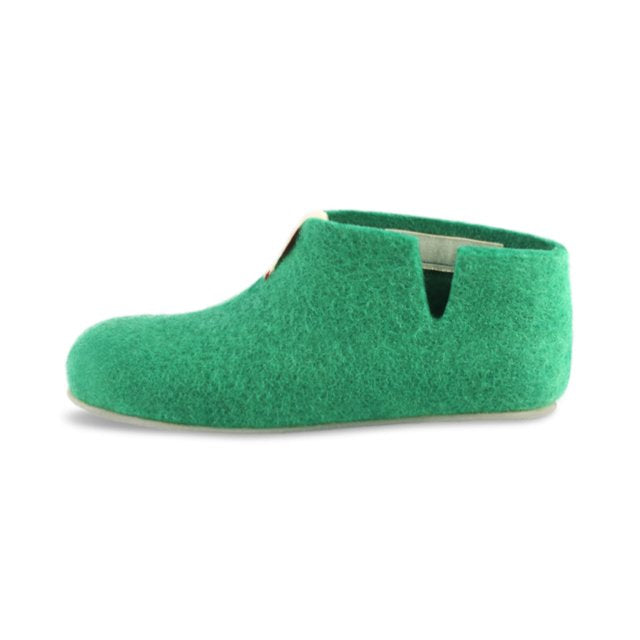
Then there is the tactile side. Quality wool has substance. It feels soft, but not in a fragile, overstuffed way. It holds shape, which gives the slipper a cleaner silhouette and a more premium feel underfoot.
Comfort is more than softness
When people shop for slippers, they often focus on lining and cushioning first. That makes sense, but softness alone is a short-term metric. Real comfort comes from the combination of fit, temperature control, support, and flexibility.
A well-designed wool slipper usually has a more stable feel than a generic foam pair. It follows the foot instead of swallowing it. That can make a big difference if you wear slippers for hours at a time while cooking, standing at a kitchen counter, or moving between home office and living room.
Support is where trade-offs come in. If you want a very minimal slipper, you may prefer something light and flexible with less structure. If your floors are hard and you spend long stretches on your feet, a sturdier sole and a more supportive footbed will likely feel better. Neither choice is universally right. It depends on how you live at home.
The same goes for warmth. Some people want full coverage in winter. Others run warm and prefer a breathable slip-on they can wear year-round. Wool works well in both directions, but the design still matters. A closed slipper with a denser upper will feel different from an open-back style meant for quick, easy wear.
Why design matters indoors too
Home footwear used to be treated as an afterthought. Now it sits in plain view during video calls, morning routines, and evenings spent hosting friends. That does not mean slippers need to make a statement. It means they should feel considered.
The best wool slippers for home have a quiet confidence to them. Clean lines, simple forms, and balanced proportions tend to age better than novelty shapes or oversized padding. A refined slipper also transitions more naturally from bedroom to kitchen to front door without looking out of place.
This is where material and design work together. Wool has visual depth, so even a minimal silhouette feels finished. It gives indoor footwear a more grounded, less disposable look. For design-conscious shoppers, that matters. If something is part of your daily life, it should be built with intention.
How to choose the right pair
Start with your floors. If your home has tile, wood, or concrete, look for a sole that gives enough grip and separation from the ground. Thin slippers can feel elegant, but they are not always the best match for colder or harder surfaces.
Next, think about how long you actually wear slippers. If they go on for ten minutes in the morning and ten at night, almost any pair can seem fine. If they are effectively your work-from-home shoes, details become much more important. Shape retention, breathability, and underfoot comfort all start to matter in a bigger way.
Fit should be close without feeling restrictive. Wool can adapt slightly with wear, so a slipper that is already loose on day one may become too relaxed over time. At the same time, you do not want pressure across the top of the foot. The goal is secure, easy comfort - not compression.
It is also worth considering whether you need indoor-only use or something that can handle occasional steps outside. Many people want one pair that can manage both. That is practical, but it usually means choosing a more durable outsole. If your ideal routine includes grabbing the mail, walking onto a patio, or stepping into a shared hallway, that added structure is worth it.
The case for natural materials at home
Indoor environments are where material quality becomes obvious. You feel it more because there is no distraction from weather, long commutes, or street conditions. At home, comfort is direct. If a slipper is too sweaty, stiff, or flimsy, you notice right away.
Natural materials tend to perform better in that intimate setting because they respond more naturally to body temperature and day-to-day wear. Wool, in particular, earns its reputation through consistency. It does not need loud features to prove itself. It just keeps feeling good.
There is also a longevity argument here. Many synthetic slippers are built for a short cycle of use, flattening quickly and losing their shape. A well-made wool slipper can hold up better, especially when paired with thoughtful construction and care options that extend the life of the product. That matters for anyone trying to buy fewer, better things.
For a brand like Baabuk, that material-first approach is central. The point is not just that wool feels good. It is that wool can deliver comfort, design credibility, and more responsible everyday use in a single product category people often underestimate.
Caring for wool slippers without overthinking it
One reason people hesitate on wool is maintenance. In practice, it is usually simpler than expected. The first step is prevention: rotate your slippers, let them air out, and avoid treating them like outdoor shoes if they are designed mainly for indoor use.
Spot cleaning is often enough for small marks. For deeper refreshes, follow the care guidance from the maker rather than assuming all wool products behave the same way. Construction, sole type, and finish all affect what is appropriate.
The bigger idea is to treat slippers like a real part of your wardrobe, not a throwaway extra. A well-made pair deserves basic care. In return, it tends to keep its comfort and appearance much longer.
Are wool slippers for home worth it?
If your current pair is flat, sweaty, or worn out after a season, the answer is probably yes. The value is not only in softness. It is in better temperature regulation, more polished design, and a feeling of quality you notice every day.
That said, the right pair depends on your expectations. If you want pillow-like cushioning above all else, some wool slippers may feel firmer than you expect. If you want breathable warmth, cleaner aesthetics, and a slipper that feels more considered from the start, wool is hard to beat.
Home comfort does not need to be overbuilt to be meaningful. Sometimes it comes down to one product you wear more than almost anything else. Choose a pair that respects that reality, and your floors, mornings, and workdays will feel better for it.


