

















Where Are Wool Shoes Made Today?
If you have ever checked a shoe label and found one country for design, another for assembly, and no clear answer beyond that, you are not alone. When people ask where are wool shoes made, the real answer is usually more layered than a single place stamped on the sole.
Wool shoes sit at the intersection of material sourcing, textile craftsmanship, product design, and final assembly. That matters because wool is not just another upper material. It changes how a shoe feels, breathes, flexes, and wears over time. So if you care about comfort, responsible production, and long-term value, it helps to understand what “made” actually means.
Where are wool shoes made, exactly?
Most wool shoes are not made through a single-country process from start to finish. In many cases, the wool may come from one region, the felt or knit may be developed in another, and the shoe itself may be assembled somewhere else entirely. Brands often separate the process this way because each stage requires different expertise.
For example, wool processing and textile development tend to happen where there is deep experience with natural fibers. Shoe assembly, meanwhile, often takes place in countries with established footwear manufacturing infrastructure. Design may happen somewhere else again, especially for brands rooted in strong product or lifestyle traditions.
That does not automatically make the product better or worse. What matters more is whether the brand is clear about the process, selective about partners, and consistent about quality control.
The stages behind a wool shoe
To understand where wool shoes are made, it helps to break the product into parts. A wool shoe is usually the result of several specialized steps rather than one factory doing everything.
Wool sourcing
The first stage is the raw wool itself. Brands may source wool from regions known for fiber quality, consistency, and performance - such as Portugal or New Zealand. The origin of the wool affects softness, durability, temperature regulation, and the finished texture of the shoe.
Not all wool behaves the same way. Some fibers create a denser, more structured feel, while others are softer and lighter. If a brand is serious about wool as a performance material, it will usually talk about the quality and purpose of the fiber, not just the fact that wool is involved.
Textile making
Once the wool is sourced, it has to be transformed into a usable shoe material. That might mean felt, knit, or another wool-based textile construction. This step is where the character of the shoe starts to take shape.
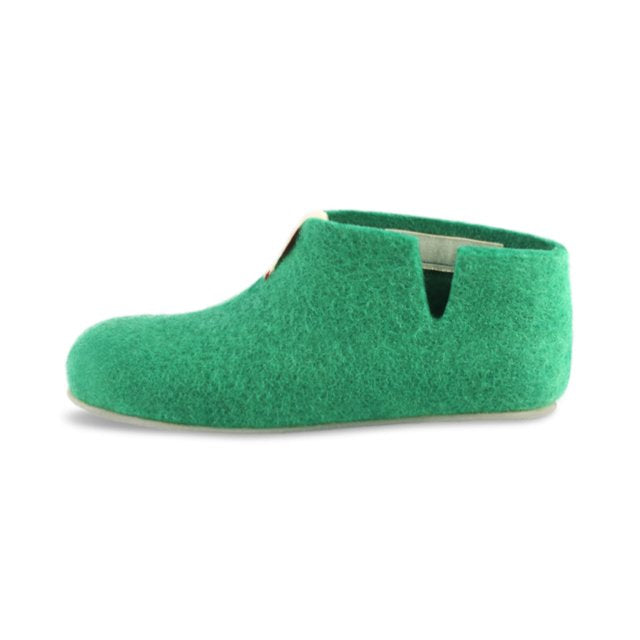
Felted wool, for instance, creates a more sculpted, cozy feel that works especially well for slippers, indoor-outdoor styles, and minimalist silhouettes. Knitted wool can create a lighter, more flexible upper. Different mills and production partners bring different strengths here, so the place where the textile is made matters almost as much as where the shoe is assembled.
Shoe design and development
A well-made wool shoe starts with smart design. Pattern making, fit testing, outsole choice, and construction details all influence how the wool performs in daily wear. A beautiful wool upper will not compensate for a poor last or an awkward sole.
This is one reason some brands emphasize where products are designed as much as where they are crafted. Design-led brands often develop their products in one country, then work with manufacturing partners elsewhere to bring those designs to life at scale.
Final assembly
The final assembly stage is where the upper, lining, insole, outsole, and finishing details come together. This is the part most consumers think of when they read “made in” on a label.
But assembly is only one chapter of the story. It is important, especially for consistency and durability, yet it does not tell you where the wool came from, where the textile was created, or where the product was engineered.
Why brands produce wool shoes across different countries
There is a practical reason many wool shoes are made through a multi-country process. Footwear manufacturing is highly specialized, and wool adds another layer of complexity.
A brand may choose one region for textile expertise, another for technical footwear construction, and another as its design base because that combination leads to a better product. In other words, a distributed supply chain can reflect precision rather than compromise.
That said, it depends on how tightly the process is managed. If production is spread across countries without clear standards, quality can drift. If the process is intentional and transparent, multi-country manufacturing can support both performance and consistency.
What to look for beyond the country name
If you want a better answer than a label alone can give, look at how the brand explains its production model. The most useful signals are usually specific and grounded.
A brand that cares about quality will often share where products are designed and crafted, what kind of wool construction it uses, and how it approaches durability, repair, and product life. That level of detail suggests the product was built with long-term use in mind rather than quick trend turnover.
You can also pay attention to whether the brand treats wool as a core material or simply as a surface story. There is a big difference between a company built around wool and one that adds a wool style to a largely synthetic lineup. Material-first brands tend to understand the fit, care, and performance details that make wool shoes work in real life.
Does country of manufacture determine quality?
Not by itself. Country of manufacture can tell you something about industrial expertise, labor standards, and manufacturing heritage, but it is not a shortcut to quality.
A poorly designed shoe made in a respected manufacturing region is still a poor shoe. A well-designed shoe made through trusted partners in multiple countries can perform beautifully for years. The stronger indicator is whether the brand is disciplined about materials, construction, and oversight.
For wool shoes in particular, quality comes down to a few things working together: the right wool structure, a thoughtful fit, durable finishing, and a sole that matches the intended use. Indoor comfort, travel, everyday city wear, and colder-weather use all ask different things from the same material.
Why transparency matters with wool footwear
Wool is a material people choose for a reason. It is breathable, naturally comfortable, and well-suited to daily wear across seasons. But those benefits only show up fully when the product is designed well and produced with care.
That is why transparency matters. If a brand is open about where its shoes are designed and crafted, that gives you a more complete picture of what you are buying. It also helps you understand the balance between design credibility, production expertise, and responsible business practices.
For design-conscious shoppers, this is not just a supply chain question. It is about trust. You want to know whether the brand sees manufacturing as part of product quality or just a back-end detail.
The best question to ask instead of just “where?”
Where are wool shoes made is a good starting point, but the better question is how are they made, and why in that way?
That shift changes what you notice. Instead of looking for a single-country answer, you start looking at the full product story: where the wool comes from, how the textile is developed, where the shoes are assembled, and whether the brand stands behind repair, replacement, or circular care. Those details say far more about quality than a label alone.
For a modern wool footwear brand, production is often a network of specialized skills rather than a single location. When that network is thoughtfully built, the result is a shoe that feels better, lasts longer, and makes more sense for the way people actually live now.
Baabuk is part of that more transparent approach, with clear references to Swiss design and where products are crafted, alongside repair, replace, recycling, and resale initiatives that extend the life of wool footwear.
The next time you turn over a shoe and look for one simple answer, take a second look. The most useful story is usually not just where it was made, but how carefully every part of it came together.


